
Table of Contents
The first time you step into the Marrakech medina, it’s easy to get lost within minutes. Not the “oops, wrong street” kind of lost, the kind where you’re thirty turns in, the map has given up, and every alley looks like the last. But that’s also where the magic is. The souks are alive — part maze, part marketplace, part theater.
If you know how to move through them, you can find real treasures, have real conversations, and leave with stories worth more than anything in your bag.
Here’s how to navigate Marrakech’s souks without losing your bearings or your patience.
Get Lost (But Do It on Purpose)
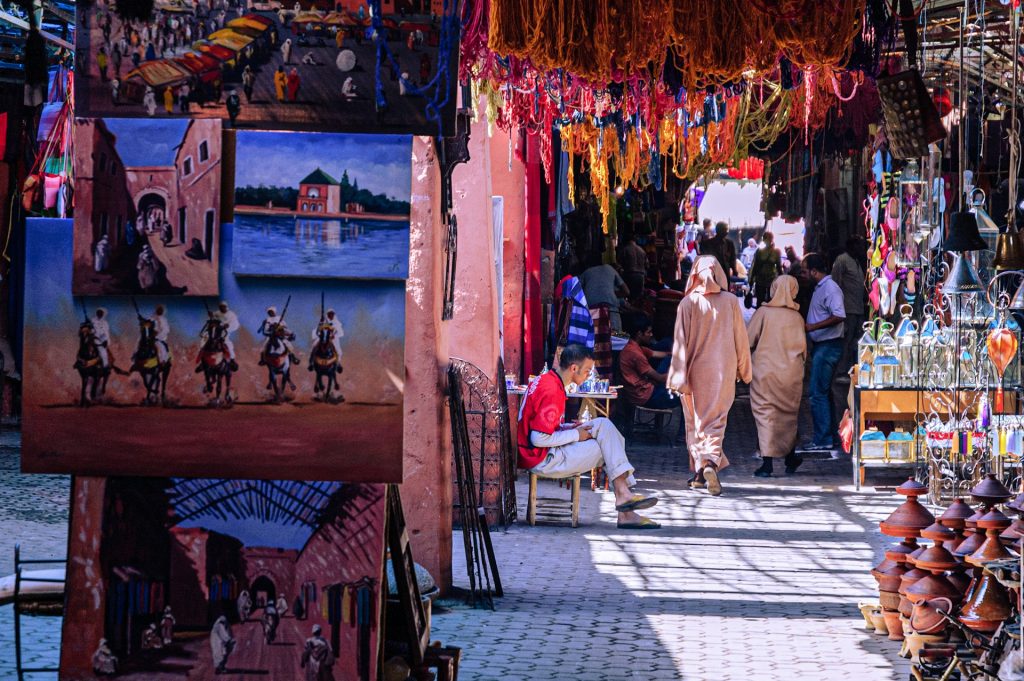
Trying to follow a map through the medina is like trying to read a book in a hurricane. GPS will glitch, street signs are rare, and paths twist into other paths with zero warning.
So don’t fight it:
- Accept that you will get lost; it’s part of the experience.
- Go in with landmarks in mind, not street names. Remember a café, a mosque, a fountain — those will help you find your way back.
- Start early in the day when crowds are thinner, and give yourself time to wander without pressure.
You’re not there to conquer the market. You’re there to move through it, eyes up, mind open.
Don’t Enter Hungry or Overwhelmed
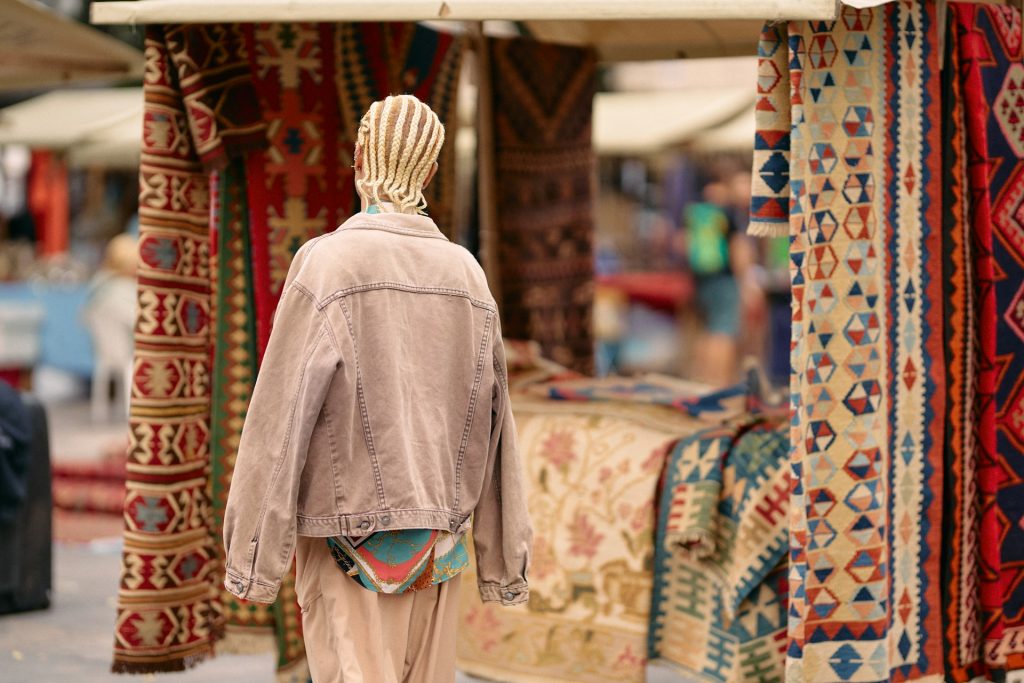
The souks are sensory overload. Saffron, leather, incense, sizzling food, mopeds brushing your elbows. If you go in tired, hungry, or rushed, it’ll feel like too much.
Before you dive in:
- Eat a solid meal, or have your protein bars handy. Better still, eat a snack nearby (tagine, flatbread, mint tea — you’ll find it all within steps of the main gate).
- Wear comfortable shoes — the cobblestones are uneven, and you’ll walk more than you plan.
- Leave big bags behind. Keep valuables secure and out of sight.
The Medina runs at its own pace. If you try to rush it, you’ll burn out fast.
Know Where to Enter and Exit
There are dozens of entrances to the souks, but a few are better for starting, especially if it’s your first time.
Smart entry points:
- From Jemaa el-Fnaa, the main square, it’s chaotic but central.
- Rue Souk Semmarine — wide, busy, and full of visual drama.
- Bab Ftouh or Bab Doukkala — less touristy, better for authentic browsing.
Always remember your exit strategy. Pick a café or landmark outside the souks and pin it on your phone before you go in. That’s your endpoint if you get completely turned around.
Learn the Flow of the Souk
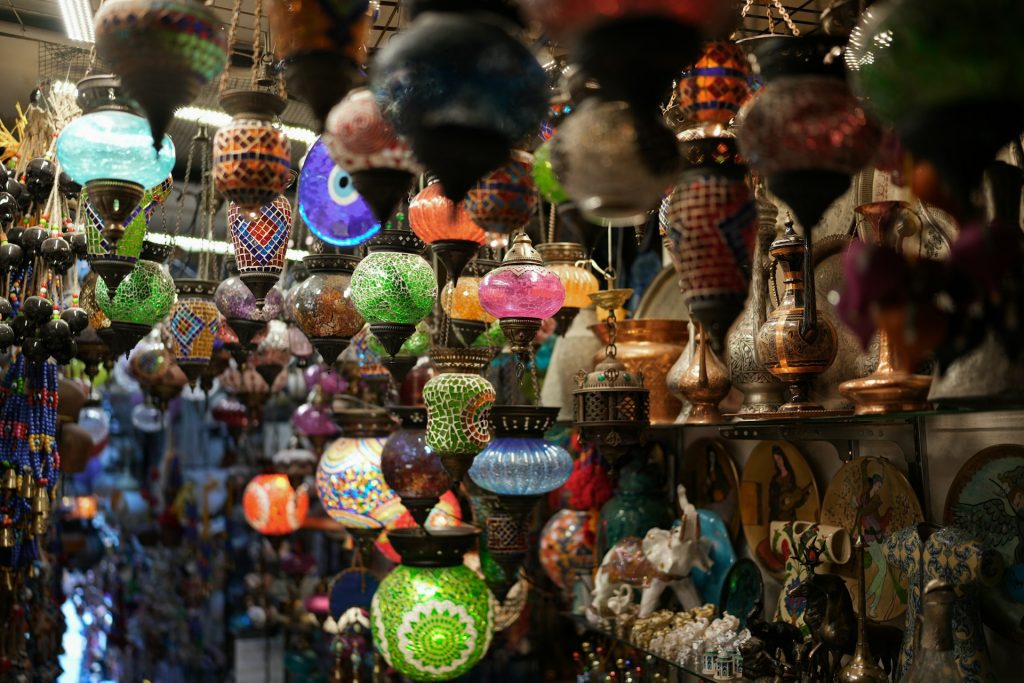
The souks are loosely organized by craft, and understanding that layout helps you navigate and bargain smarter.
Main sections:
- Souk Semmarine: Jewelry, textiles, slippers, bags.
- Souk el Attarine: Spices and perfumes.
- Souk Chouari: Woodworkers and carpenters.
- Souk Haddadine: Blacksmiths and metalworkers.
Prices tend to rise the deeper you go. Items near the front are often higher in price and lower in quality. Walk in a little further before you start shopping.
Don’t Bargain Like a Tourist
Bargaining is part of the game in Morocco. It’s not rude, it’s expected. But how you do it matters.
Here’s how to do it respectfully and effectively:
- Ask the price first, then counter at about half. Expect to meet somewhere in the middle.
- Stay friendly. This isn’t a fight. It’s a conversation.
- Don’t bargain if you’re not interested. Walking away after 15 minutes of haggling just to “see what they’ll offer” wastes everyone’s time.
- Buy only if you want the item. Not because you feel bad or pressured.
You’ll often be offered tea. That’s a good sign, but don’t feel obligated to buy just because someone pours you a cup.
Be Firm, Not Defensive
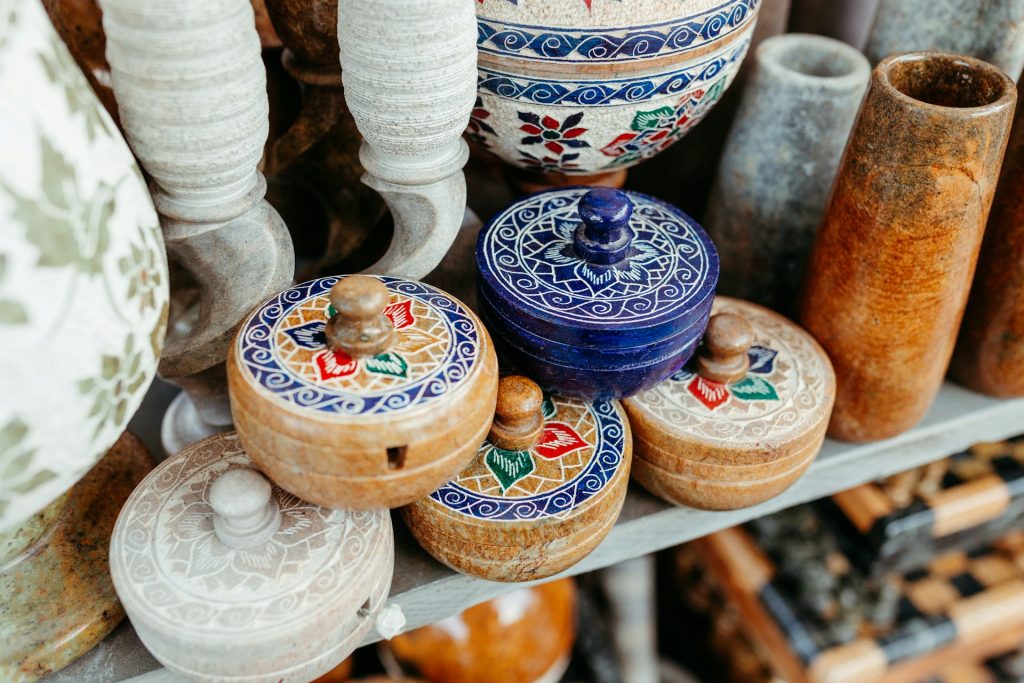
Some vendors are warm and low-pressure. Others are pushy, persistent, and a little too eager to walk beside you for three blocks.
Tips for handling it:
- A clear “no thank you” with eye contact is usually enough.
- If they keep pushing, don’t argue, just walk. Engagement feeds attention.
- Avoid getting drawn into long conversations if you’re not looking to shop. Keep it polite and short.
Confidence and calm body language do more than words. You’re not being rude. You’re setting the tone.
Know the Scams and How to Avoid Them
Most vendors are honest. But like anywhere with heavy tourism, a few are playing a different game.
Common tricks:
- “That area is closed today,” said “helpful” strangers trying to lead you to their cousin’s shop.
- Changing prices after the deal is done — always clarify and confirm before paying.
- Fake antiques or designer goods — if it looks too good to be true, it is.
Stick to your gut. If something feels off, back out. There’s always another stall, another vendor, another version of the item you’re looking for.
Buy With Intention
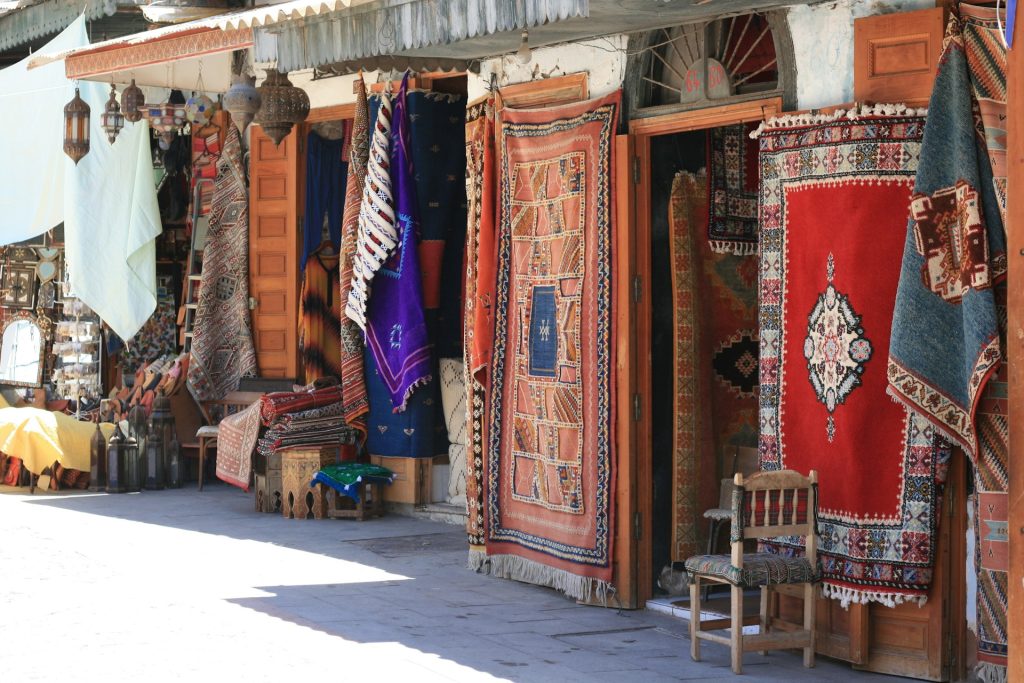
The souks are full of beautiful things — handwoven rugs, brass lamps, spices, carved wood, spices, ceramics. But buying everything that catches your eye leads to regret (and overweight baggage fees).
Smart strategies:
- Walk the souks once without buying anything, just to get a sense of prices and quality.
- Take photos of items you like, then circle back.
- Ask the vendor what makes their product different — handmade, family-owned, locally sourced? Good sellers will have real answers.
- If it’s fragile or large, ask about shipping options — many vendors will pack and ship internationally for a reasonable fee.
The best purchases are the ones with a story. Not the ones you were pressured into.
Capture the Chaos Without Intruding
Photography in the souks can be tricky. It’s stunning but also sensitive. Many vendors and locals don’t like being photographed without consent.
Here’s how to shoot respectfully:
- Ask before taking portraits, especially of people at work or in traditional clothing.
- Use wide shots and environmental framing — show the scene, not just the face.
- Avoid taking photos of religious items, shrines, or children without permission.
- A few dirhams as a thank-you for posed photos is common and appreciated.
If someone says no, respect it. There’s no shortage of visual texture in the souks, so keep moving.
Exit Before You’re Exhausted
The worst time to make a decision, financial or logistical, is when you’re heat-drunk and overstimulated.
Know when to pull the plug:
- Step into a café. Get tea, cool down, reset.
- Head back to your riad. Drop your bags, take a breath.
- Revisit the market the next day, you’ll see things differently when you’re not running on empty.
The souks don’t go anywhere. There’s no prize for how much you can carry in one trip.

I’m Garrett, a seasoned photojournalist with a passion for uncovering the world’s hidden treasures. My journey is fueled by a deep curiosity for diverse cultures and breathtaking landscapes. When I’m not behind the lens capturing the world’s wonders, you can find me exploring underwater realms or sharing my passion for discovery with my two adventurous children.
Related posts:
 The Ultimate Guide to Street Food Safety in Thailand – Learn from My 100+ Street Food Adventures (And 3 Food Poisoning Mistakes)
 Feast Under the Neon: How to Navigate the Night Markets of Taiwan
 The Best Apps for Navigating Foreign Cities Without Data – Here’s Every App That Works Offline
 The Ultimate Guide to Food Tourism in Japan – Insights from a Food-Obsessed Explorer Who Ate Everything